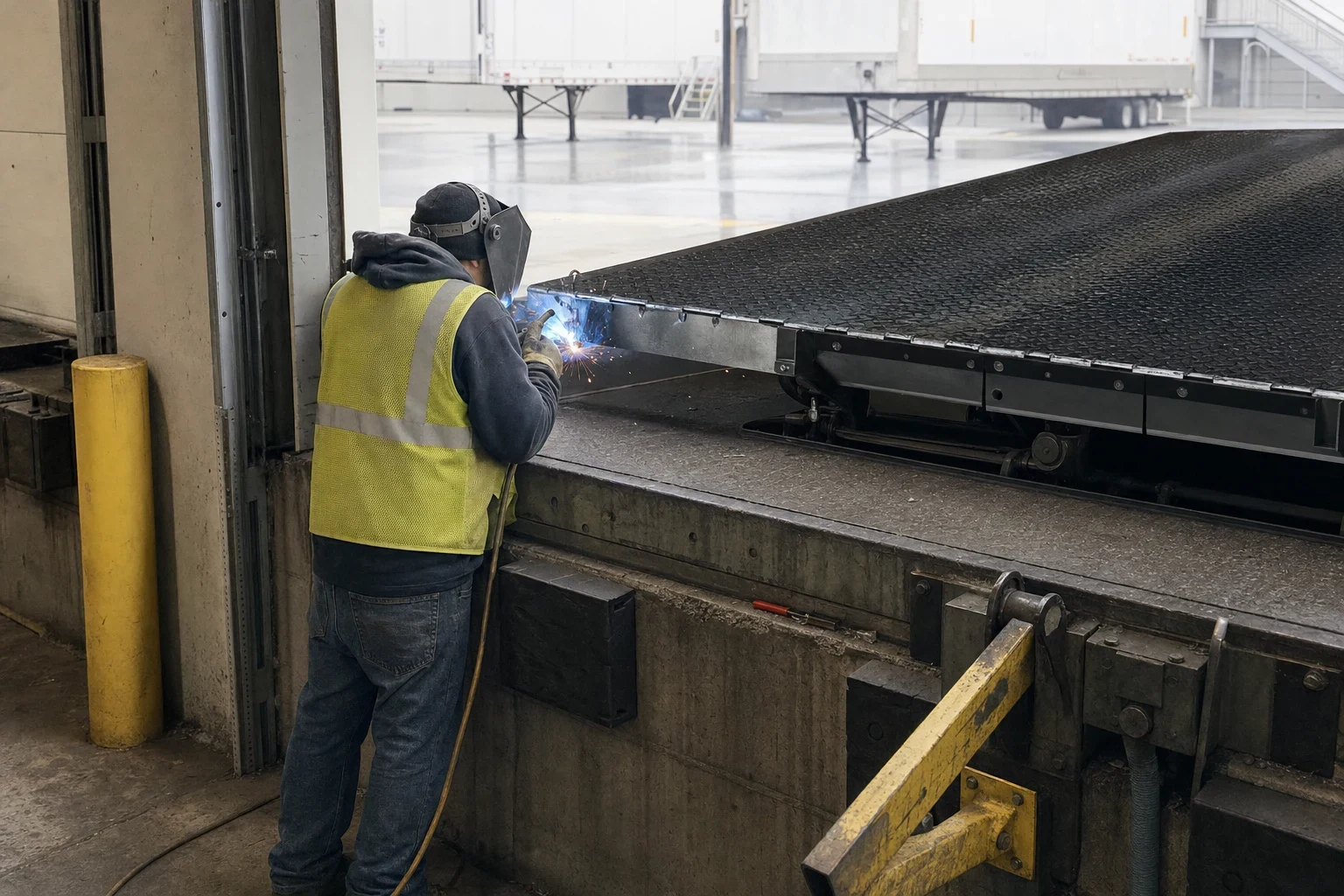
Loading Dock Repair in Tamaqua, PA
We repair, maintain and install dock levelers, overhead doors, high speed doors, rolling grilles and vehicle restraints for warehouses, manufacturers and receiving docks in Tamaqua, Hazleton, Lehighton and nearby. Every job starts with a close look at the equipment, so you hear what is worn, why it failed and what it takes to fix it.
- Forklift and scissor lift training certified
- 1-year labor warranty
- Findings before recommendations
- Photos of worn parts
Dock Equipment We Service, Sell and Install
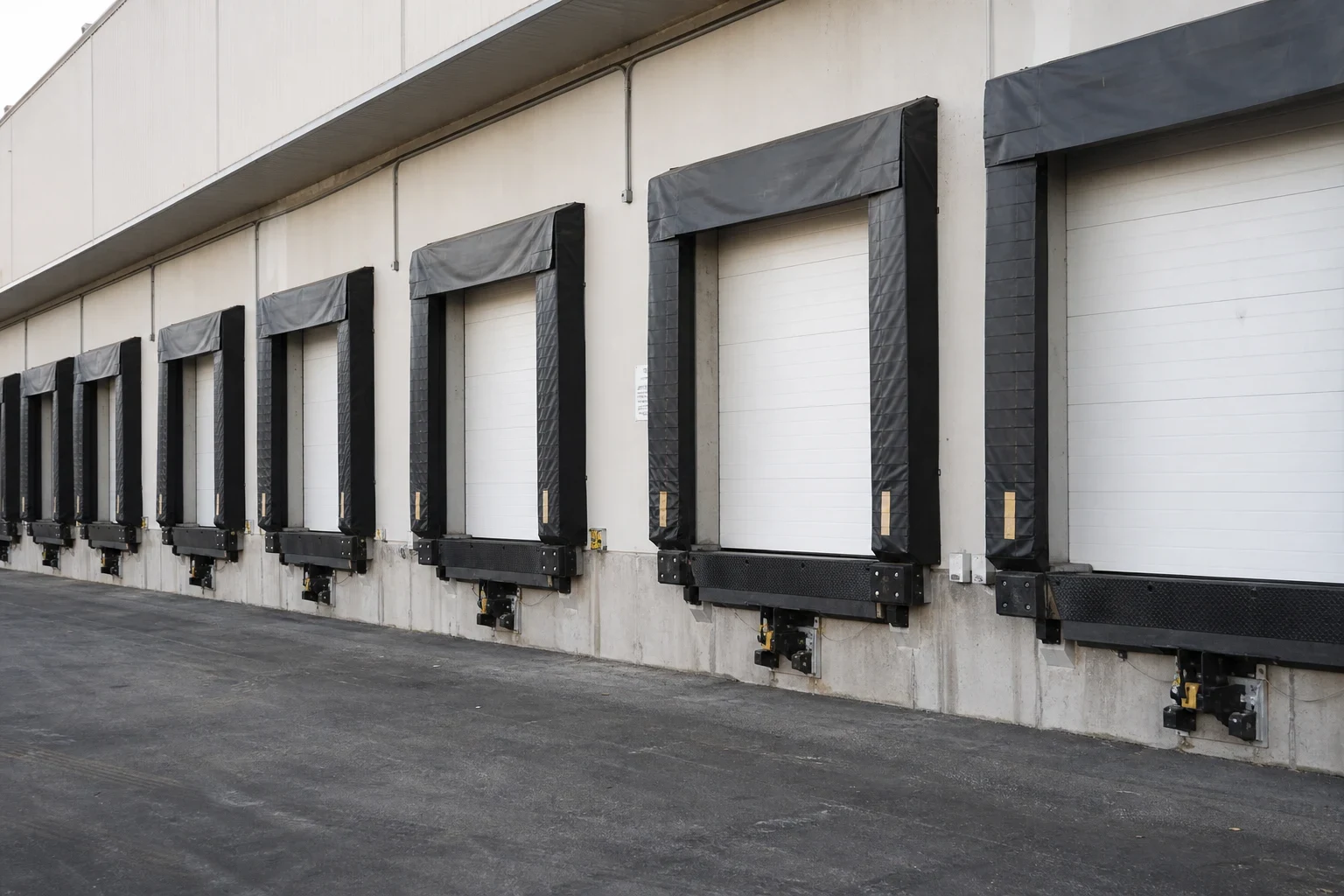
Our work covers the full door-to-trailer path: the dock leveler that bridges the gap, the vehicle restraint that holds the trailer, and the overhead door, high speed door or rolling grille that closes the opening. We handle repair, loading dock preventative maintenance, loading dock equipment sales and loading dock equipment installation. If a part can be repaired, we say so. If a unit is past saving, we show you why before talking about a replacement.
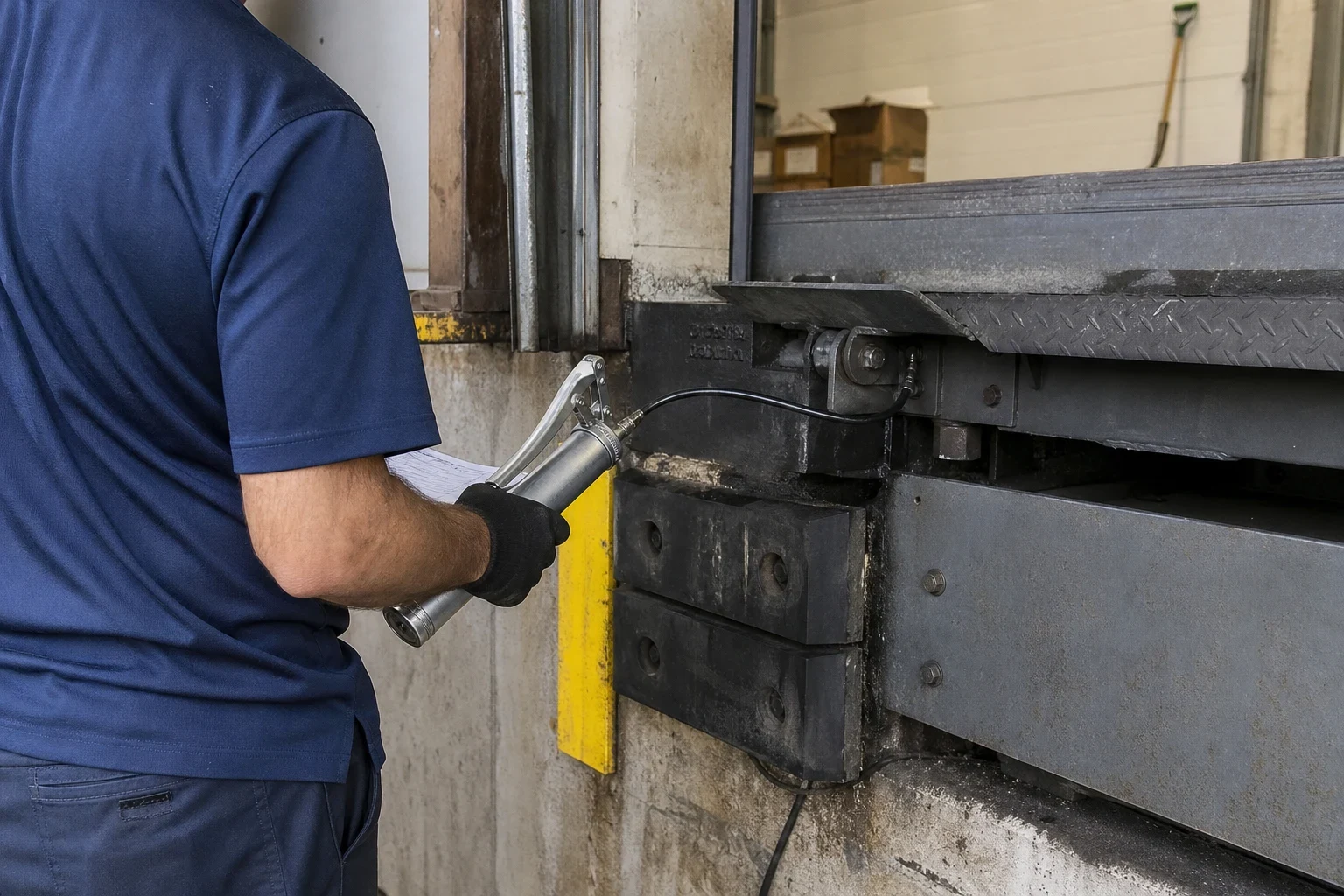
Preventative Maintenance
Scheduled service for levelers, doors and restraints, with a written report on what we found and what can wait.
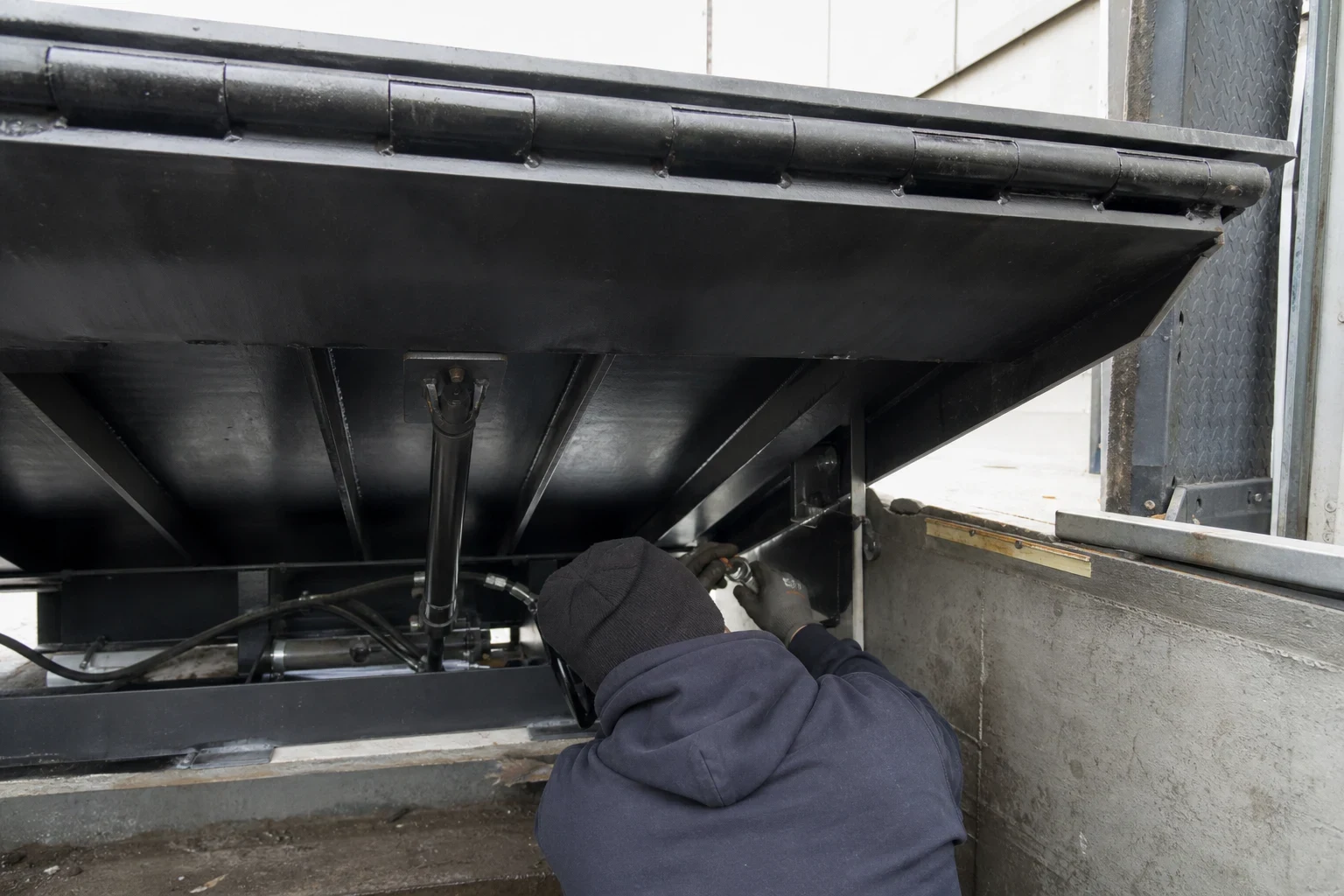
Equipment Installation
New dock levelers, vehicle restraints, bumpers and doors, sized from real measurements of your pit, dock height and trucks, then set, wired and tested.
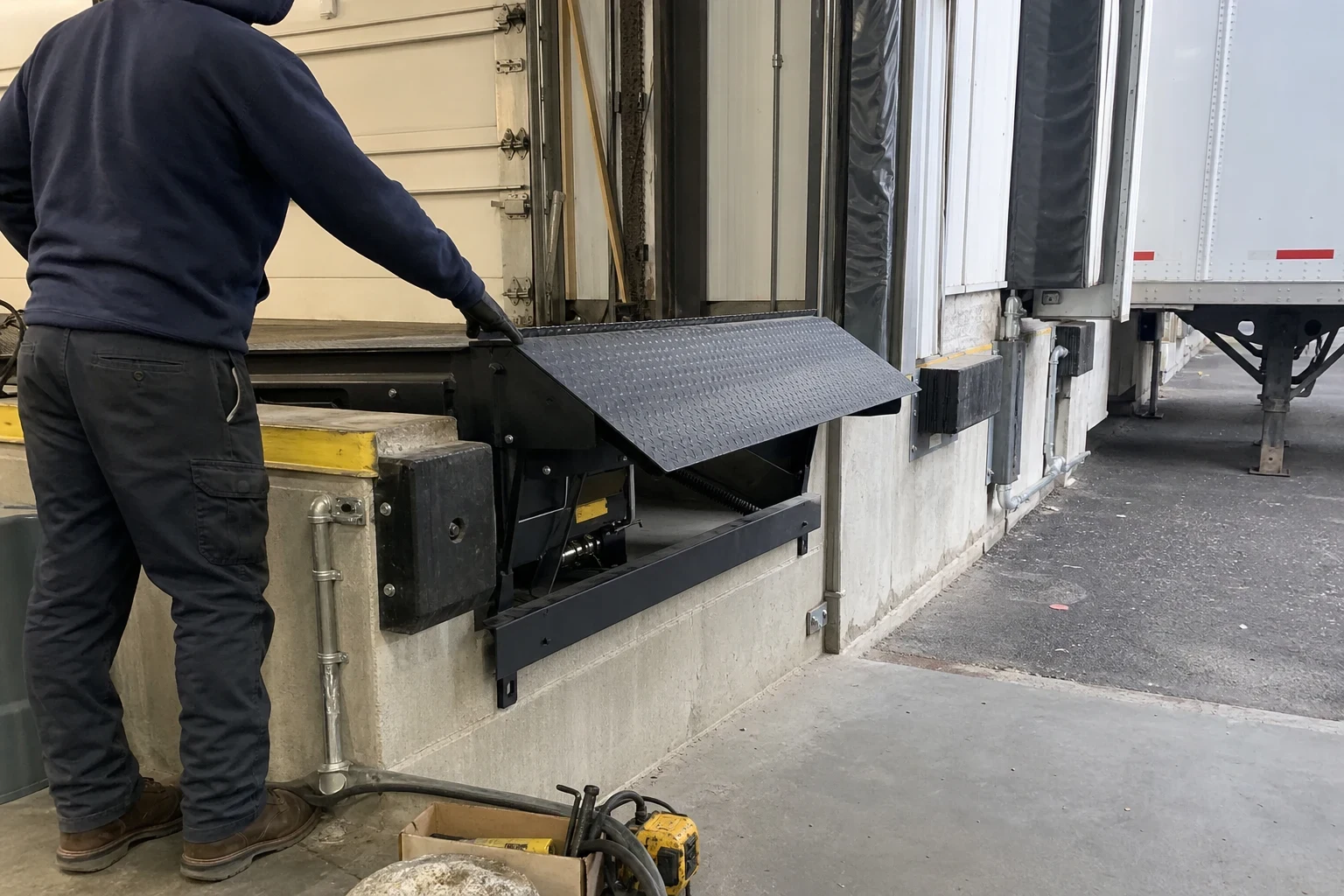
Equipment Sales
We measure the pit, the dock face and your trailer mix first, then recommend levelers, restraints, seals and doors that fit how your dock actually runs.
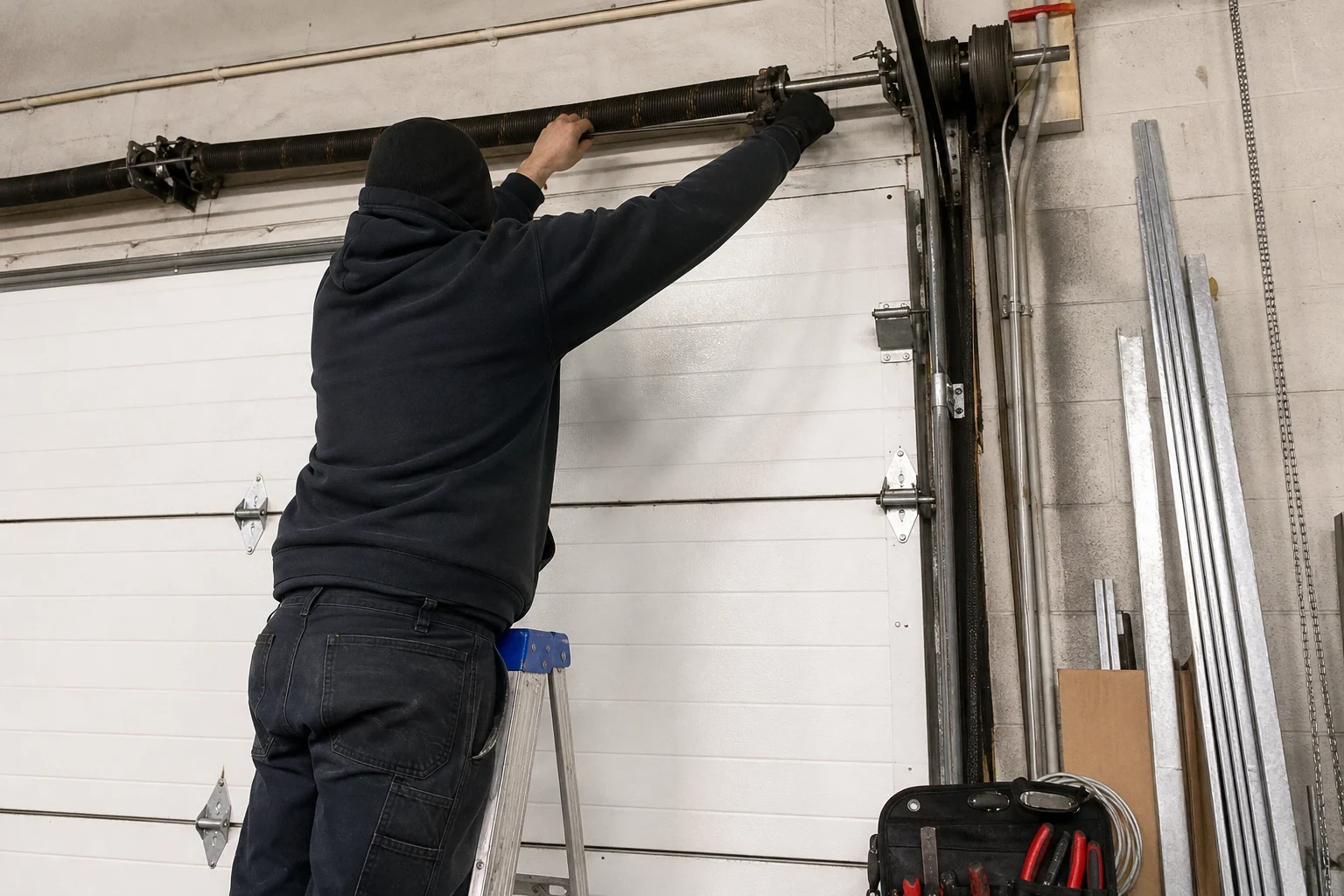
Overhead Doors
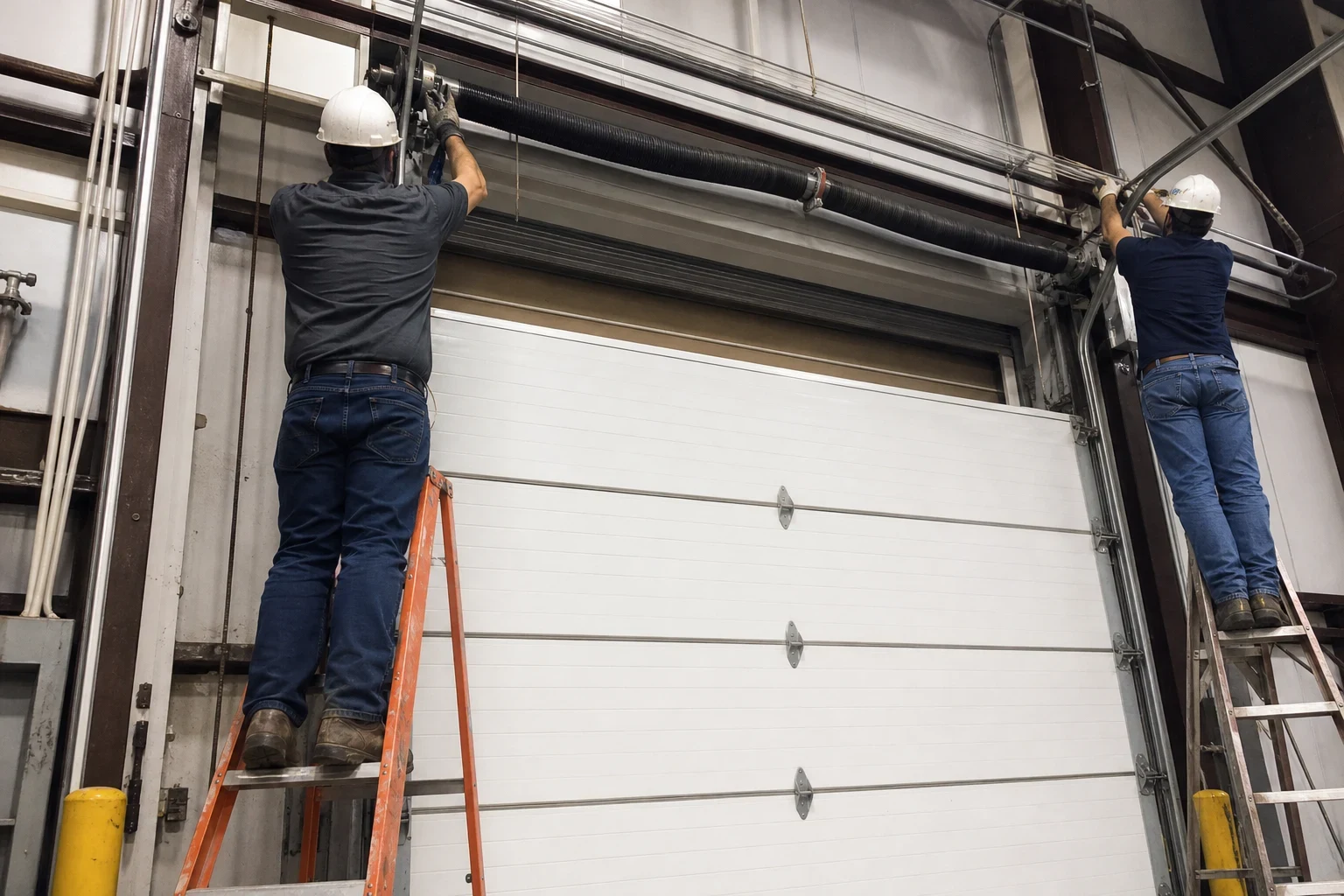
Repair and service for sectional dock doors: springs, cables, tracks, panels, seals and operators, checked before we recommend anything.
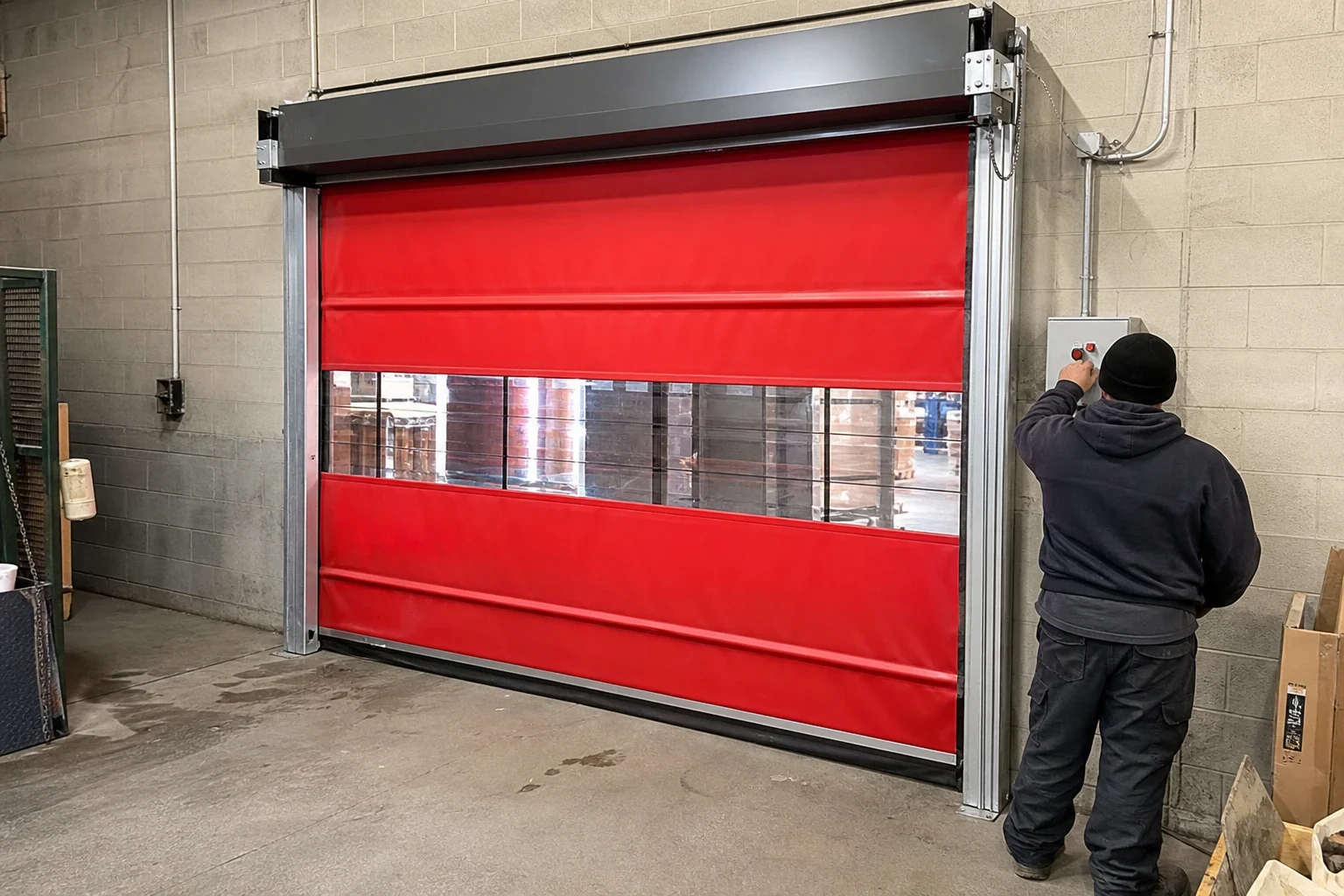
High Speed Doors
Repair, adjustment and installation of fabric roll-up and rigid high speed doors, from torn curtains and drifting limits to drive faults and sensor problems.
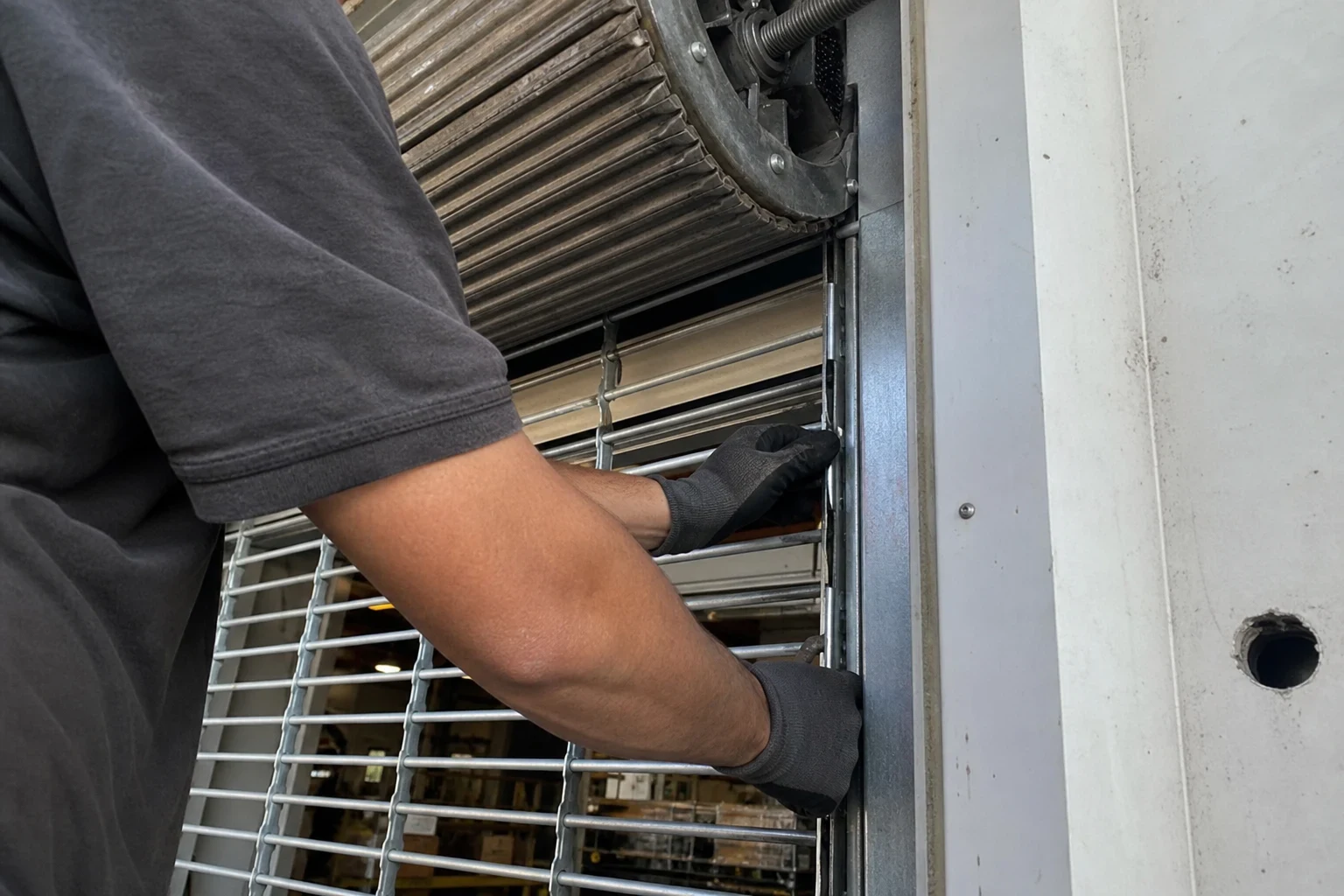
Rolling Grilles
Spring, guide, curtain and operator repair for rolling security grilles, plus new grille installs, starting with an inspection and a written estimate.
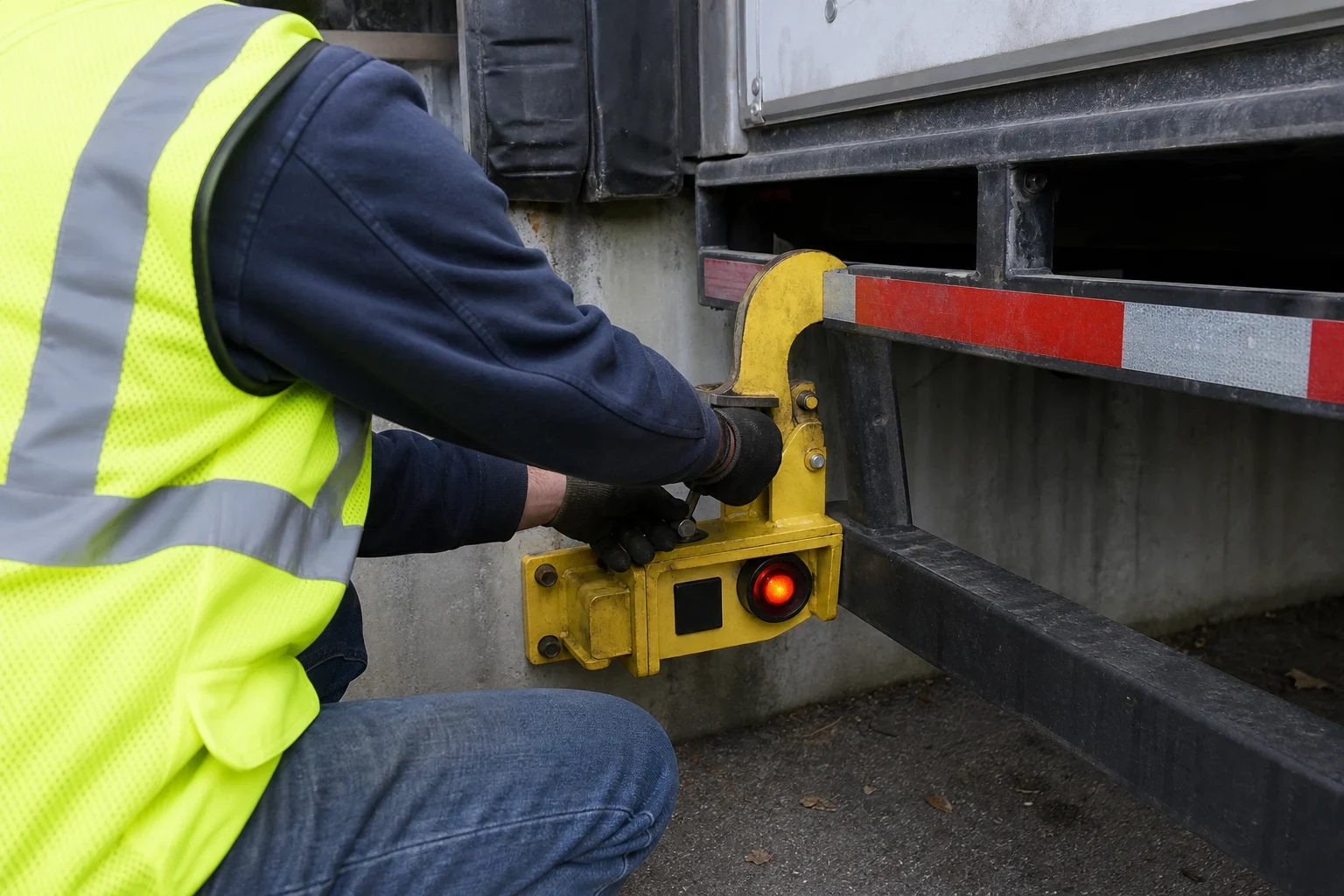
Vehicle Restraints
Repair and installation of hook-style and wheel-based vehicle restraints, including lights, sensors and interlocks, after hands-on testing at your dock.
Dock Levelers
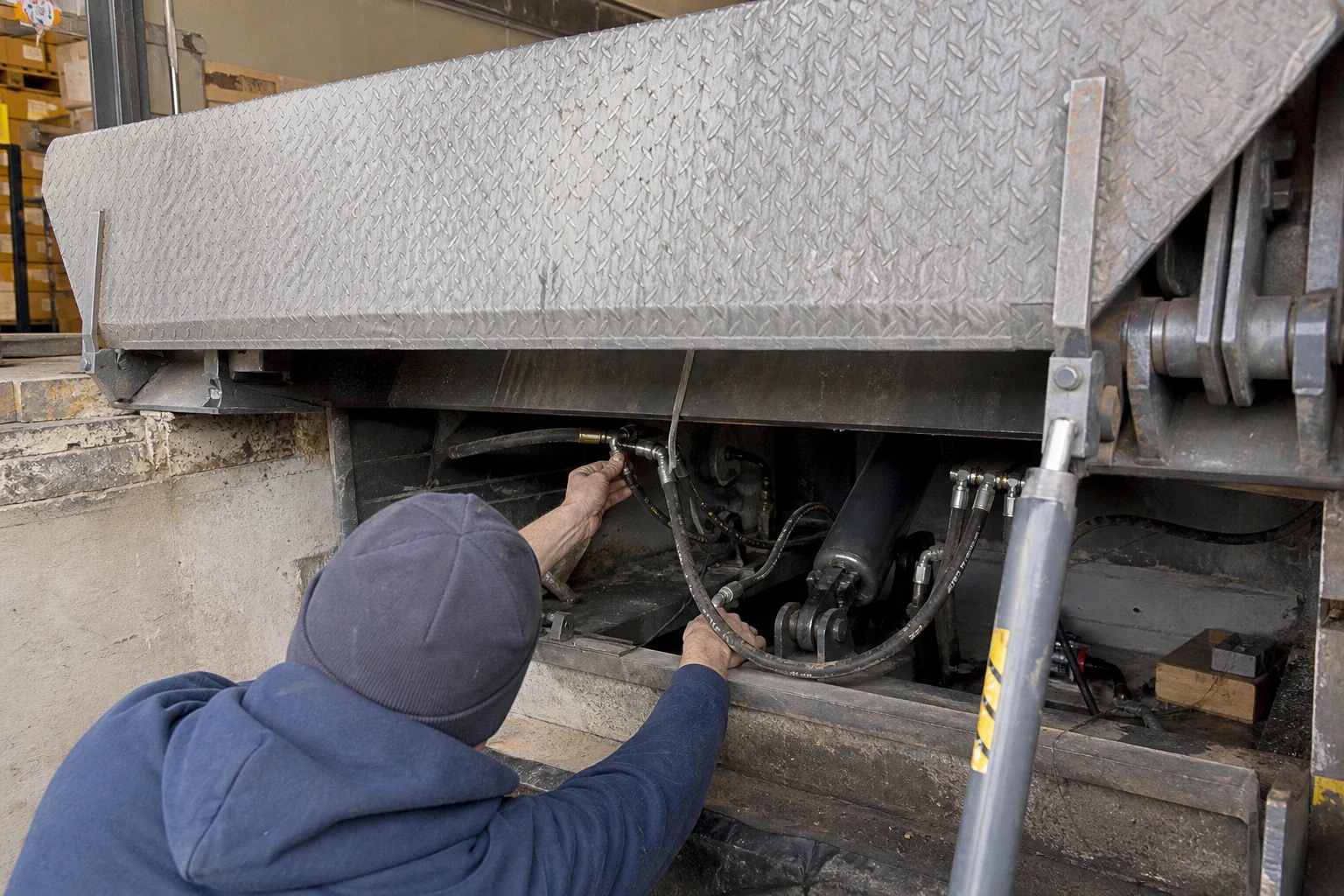
Repair and service for hydraulic, air-powered and mechanical dock levelers, starting with a close look at the deck, lip, hinges and drive system.
From First Call to Finished Dock
The steps stay the same for a single stuck overhead door or a full row of levelers, so you always know what comes next.
- 1
You call and describe the problem
Tell us which equipment, what it is doing, and when it started. We set a time to come out that works with your receiving schedule.
- 2
We check and document
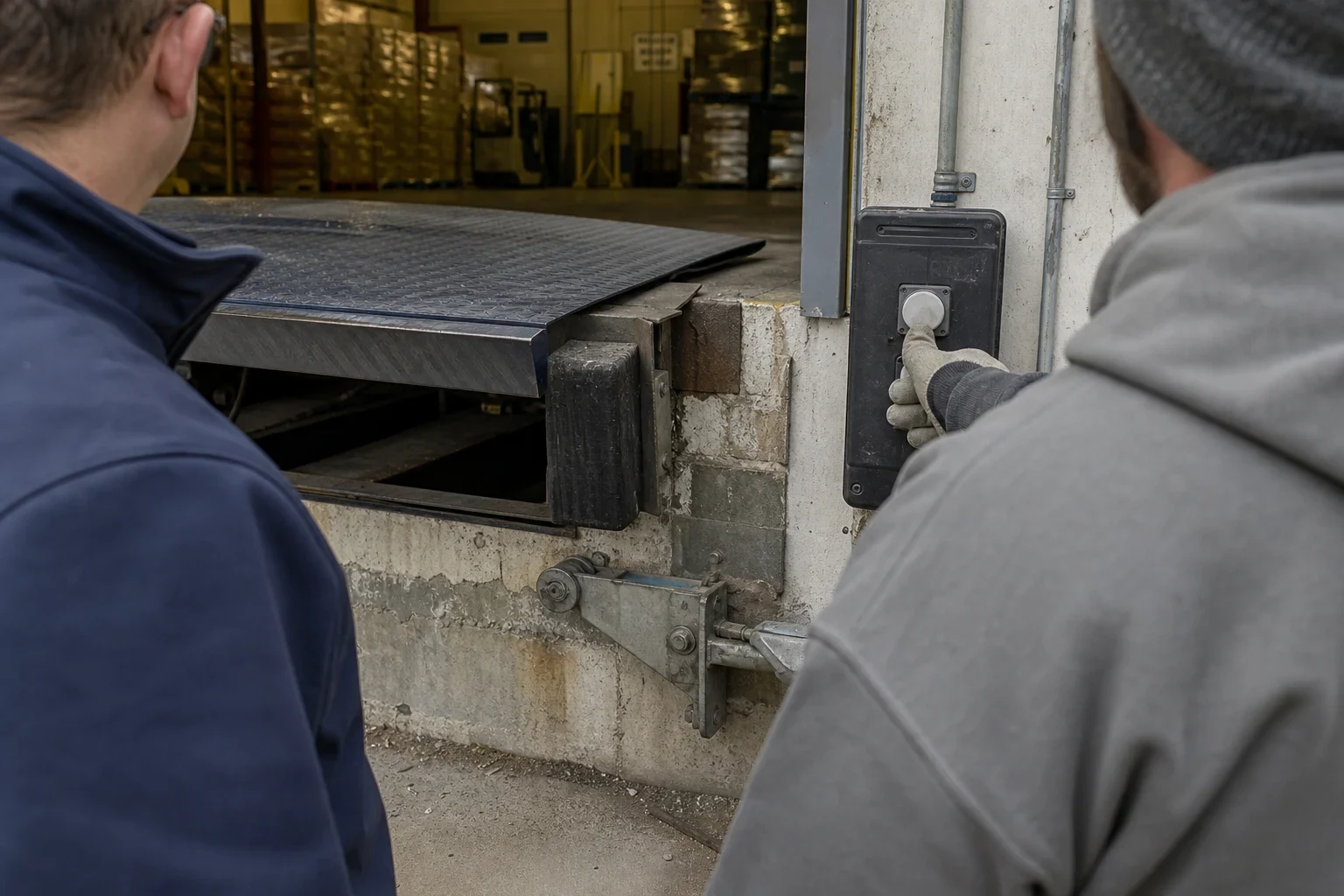
A technician runs each unit through its cycle, checks hydraulics, springs, welds, cables and controls, and photographs what is worn or damaged.
- 3
You get plain findings and an estimate
We walk you through what we found and why it happened, then give you a line-item estimate. You decide what gets done and when.
- 4
We repair, test and clean up
After the work, every unit is cycled under normal operation and checked again. We remove old parts and debris so the dock is ready for the next trailer.
About Loading Dock Repair Tamaqua
Our crews keep dock equipment running for distribution centers, plants, grocery and retail receiving areas and logistics operations around Tamaqua. We handle levelers, vehicle restraints and most common door types, and we sell and install new equipment when a unit genuinely needs replacing.
Our approach is simple. Look closely, write down what is there, explain it in plain terms, and let you make the call. A facility manager should never have to guess whether a recommendation is about safety or about selling a part. That is why preventative maintenance visits are a big part of what we do: catching a weeping hydraulic cylinder or a worn door roller early costs far less downtime than a failure in the middle of a shift.
- Warranty
- 1-year labor warranty
- Certifications
- Forklift and scissor lift training certified
What Moves the Price of Dock Repair
We do not quote a dock repair from a phone description, because the same symptom can come from very different parts. Price follows what we find on site. These are the factors that change it most.
After the visit we give you a written estimate broken out by dock position and by part, so you can approve the safety items now and schedule the rest. Nothing beyond what you approve gets done.
- Root cause versus symptom
- A sagging leveler deck might need a hold-down adjustment or a full lift spring set. A door that drifts might need a cable or new torsion springs. The cause sets the parts list.
- Type and age of equipment
- Hydraulic, air-powered and mechanical levelers use different parts. Older or discontinued units can need parts sourced or fabricated, which adds time.
- Structural condition
- Cracked pit curbs, broken embed angles or corroded door jambs have to be dealt with before new equipment will sit or travel correctly. Road salt carried in on trailers through a long Tamaqua winter speeds up that corrosion.
- How many positions need work
- Servicing several dock positions on one visit costs less per position than separate trips, because setup and travel are shared.
- Access and scheduling
- Work that has to happen around active receiving, or outside your normal shifts, takes more planning and can affect labor time.
Facilities We Serve Around Tamaqua
We work at loading docks throughout Tamaqua and the surrounding Schuylkill and Carbon County area. That includes facilities in Lansford, Summit Hill, Nesquehoning, Jim Thorpe, Lehighton, Mahoning, West Penn and Rush, as well as Hazleton and Hazle Township along the Interstate 81 corridor.
- Tamaqua
- West Penn
- Lansford
- Rush
- Summit Hill
- Jim Thorpe
- Mahoning
- Nesquehoning
- Hazleton
- Hazle
- Lehighton
If your facility is near these towns and not on the list, give us a call and we will tell you whether we can reach you.
How We Work on Your Dock
A dock problem usually has a cause upstream of the symptom. A leveler that will not rise is often a hydraulic or spring issue, not a bad lip. We look for the cause first.
The whole position gets checked
We look over the leveler, restraint, door, seals and bumpers at the dock position you called about. A torn dock bumper, for example, lets trailers strike the leveler lip and the wall, and replacing the lip alone just repeats the damage.
Findings you can read
You get a written list of what we found, with photos of cracked welds, leaking cylinders, frayed cables or worn hinge pins. Each item is marked as a safety issue, a wear item to plan for, or something that is fine for now.
Repair before replace, when it holds up
Many levelers and doors have years left once a spring, seal kit or hinge is replaced. We recommend replacement only when the structure itself, such as a deck plate or door track, is too far gone to repair safely.
Work planned around receiving
We ask about your truck schedule before we start. Where we can, we take one dock position down at a time so freight keeps moving through the others.
Safety lockout on every job
Equipment is locked out and the leveler deck is propped on its maintenance strut before anyone works underneath it. Doors are lowered and tension released before springs or cables are touched.
Questions Facility Managers Ask Us
- What does your warranty cover?
- Our repair and installation work carries a 1-year labor warranty. If the labor we performed needs attention within that year, we come back and correct it. We go over exactly what was done on each job so you know what the warranty applies to.
- How do I know if a dock leveler should be repaired or replaced?
- It depends on the structure, not the symptom. Worn springs, hydraulic seals, hinge pins and lip parts are normal repair items. A cracked or badly bent deck plate, a failing frame, or a pit that no longer supports the leveler usually means replacement. We show you photos of what we found so the reasoning is clear.
- How often should loading dock equipment get preventative maintenance?
- Busy docks running multiple shifts generally need service more often than a dock that sees a few trucks a week. A common starting point is a scheduled service visit a few times a year, adjusted to your traffic and what each visit finds. We lubricate pivot points, check hydraulic fluid and hoses, adjust springs and test controls and safety features.
- Can you work while we are still receiving freight?
- Usually, yes. We plan with you ahead of time and take one dock position out of service at a time when the layout allows. Larger jobs like a leveler replacement may need a position closed for longer, and we tell you that before work starts.
- Do we need vehicle restraints, or are wheel chocks enough?
- Wheel chocks can work when they are placed every time and the trailer is in good shape. Vehicle restraints hook the trailer's rear impact guard and reduce the risk of trailer creep or early pull-away, with lights that tell the driver and dock crew when it is safe. We can look at your docks and explain which approach fits your traffic and safety program.
- Do you sell new equipment, or only repair it?
- Both. We offer loading dock equipment sales and installation for levelers, vehicle restraints, overhead doors, high speed doors and rolling grilles. We only suggest new equipment when what we find shows repair is not the sensible option.
- What should we have ready when you arrive?
- Let us know which positions are affected and clear the area in front of them if you can. If you have model plates, past service records or notes on when the problem started, those help us narrow the cause faster.
Find Out What Is Really Wrong at Your Dock
One visit gets you a full look at the equipment, photos of what we find and a written estimate you can act on at your own pace.